Melbourne short-term rentals: pick the right suburb

The CBD, the inner north, Richmond, South Yarra and St Kilda all feel different. Start with where your days will actually happen.

Editorial destination photography

Melbourne short-term rentals run from small city flats to whole houses further out. The right one depends on your map, not on the photos. Work out where you will spend your time, how late you will come home, and whether you need to park a car. Then start comparing.

  1. Useful before inventoryChoose an area with evidence-led local guidance.
  2. Real properties onlyNo generated homes, prices or availability.
  3. Direct property linksPublished stays lead to the host's own website.

Start with your map, not the listing

Write down the things you cannot move. A match, a show, a wedding, a hospital visit, a work day. Put a pin on each one. The best suburb is usually the one closest to most of those pins.

Melbourne is flat and wide, so places look closer on a map than they feel at peak hour. A trip that takes twenty minutes at ten in the morning can take twice that at half past five.

Then think about the trip home. A suburb that is easy in daylight can be awkward at midnight with tired kids, bags or anyone who cannot walk far. Plan for the latest night of your trip, not the easiest one.
Where to stay in central Melbourne

The CBD suits a first visit. You are close to the laneways, the shops, the food and the main train and tram lines. Transport Victoria says tram travel is free when your whole trip starts and ends inside the Free Tram Zone, which covers the city centre and Docklands. Check the current map, because a flat one block outside the line still needs a fare.

Southbank puts you by the river, the arts venues and the walk back over the bridge. Docklands works for events at Marvel Stadium and for the western edge of the centre. East Melbourne is quieter and sits near the MCG and Fitzroy Gardens. Carlton is handy for Lygon Street and Melbourne Museum.

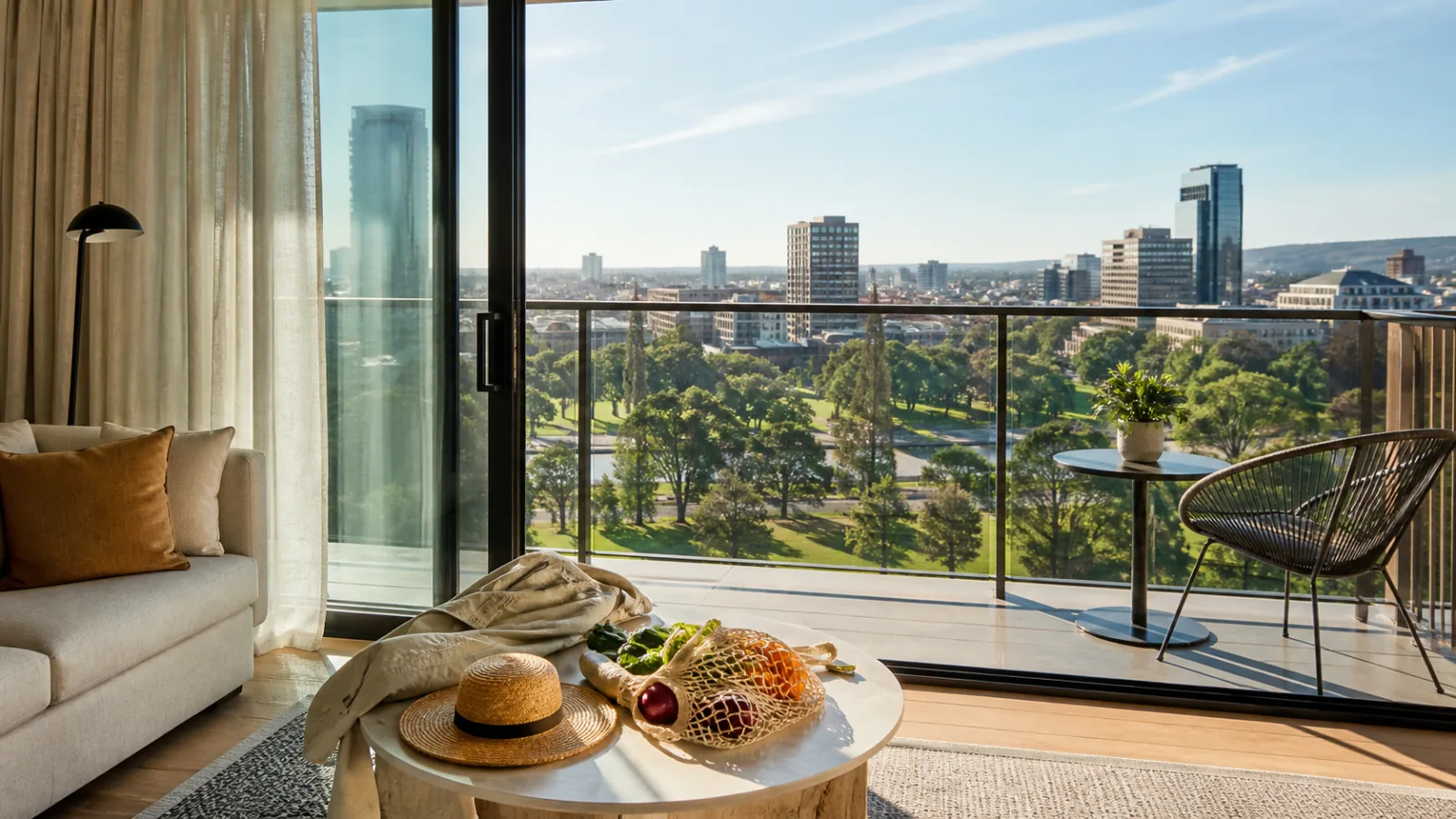
In a tall building, the block matters less than the flat itself. Ask about the lift, late check-in, luggage storage, street noise and how the car park works.

  • Choose the CBD if it is your first visit and you want everything close.
  • Choose Southbank for river dining and the arts precinct.
  • Choose Docklands for stadium events and quieter streets at night.
  • Choose East Melbourne for the MCG, gardens and a calmer base.
  • Choose Carlton for Lygon Street, the museum and the university end of town.

Inner suburbs for a more local stay

Fitzroy and Collingwood sit just north of the centre. They suit people who want small shops, bars, live music and street art rather than a hotel strip. Brunswick and Northcote carry on further north with the same feel and a bit more room.

Richmond works for sport, food and easy trains east of the city. South Yarra and Prahran suit shopping and a quieter street with good tram links to the south-east. Port Melbourne and Albert Park sit near the bay and the beach tram.

St Kilda is the classic bayside base. You get the beach, the pier and a strong food scene, with a longer tram ride into town. Footscray, just west, is close to the city by train and is well known for its food. In every case, look up the actual suburb and the nearest stop before you commit.

  • Choose Fitzroy or Collingwood for small bars, food and inner-north streets.
  • Choose Richmond for the sport precinct and fast trains east.
  • Choose South Yarra or Prahran for shopping and quieter streets.
  • Choose St Kilda or Port Melbourne if you want the bay on your doorstep.
  • Choose Footscray or Brunswick if you want space and food over polish.

Apartment, house or serviced flat

A short-stay apartment suits couples, solo travellers and small families. You get a kitchen and usually a laundry in a small footprint. A house gives you more bedrooms and a yard, but it will normally sit further out.

A serviced apartment sits between a flat and a hotel. Some have a front desk and cleaning during your stay. Others just call themselves serviced. Ask what is actually included, and how often.

For a two-bedroom stay, check the bedding before anything else. Sleeps four can mean two real bedrooms, or one bedroom and a sofa bed. Then check air conditioning, blackout blinds, a desk, the laundry and how many bathrooms there really are. Families should ask about balcony locks and stairs. Drivers should check the car park height, the entry and whether the space is included in the price.

Trams, trains and parking

Melbourne runs trams, trains and buses on one ticket system. Most visitors will not need a car in the inner suburbs. Trams are slow but simple, and trains are faster over longer runs.

Late travel needs a bit more thought. Transport Victoria runs Night Network services on weekends, but the timetable is not the same as the daytime one. Check the current journey planner rather than guessing, especially if your night ends after midnight.

Parking is the thing people underestimate. Inner suburbs use permit parking on many streets, and a visitor permit is not guaranteed. If the listing says parking, ask whether it is on site, whether it is a shared bay, and what the height limit is. If it says parking nearby, treat that as no parking.

What to check before you book

Ask for the full address or at least the exact block. Then ask about the check-in method, whether anyone meets you, and what happens if your flight lands late.

Get the total price with cleaning, any bond and any other charge included. Ask about the cancel rules in writing. Ask whether the building has rules about guests, noise or lifts on moving days.

If quiet matters, ask what is directly outside. A tram line, a late venue, a main road or a building site will all shape your sleep. A host who answers those questions clearly is usually a good host.

  • Confirm the exact block, not just the suburb name.
  • Ask what the building charges for parking and whether the bay fits your car.
  • Ask about late check-in before you book a late flight.
  • Count real bedrooms rather than the guest number.

A first-time Melbourne plan

Three nights works well. Give day one to the city itself: the laneways, the river and a gallery. Stay central so you can drop your bags and start walking.

Give day two to one inner suburb. Fitzroy, Richmond or South Yarra each fill a day easily. Take a tram out and walk back if the weather is kind.

Give day three to the bay or a day trip. St Kilda and the beach tram make an easy half day. If you have a car, the Yarra Valley is a comfortable day out from the eastern suburbs.

Melbourne stay questions, answered plainly.

The local decisions this guide cannot make for you.

What does short-term rental mean on this page?

It means a furnished place to stay for a short visit, not a normal rental lease. Each home sets its own minimum stay and its own rules. Some take two nights, others want a week.

Is the Melbourne CBD always the best base?

No. The CBD is easy for a first visit and for central events. If your trip is built around food, music or sport, Fitzroy, Richmond, Carlton or St Kilda may suit you better and cost less.

Do I need a car in Melbourne?

Usually not for an inner-city trip. Trams, trains and walking cover most of it. A car helps for day trips and outer suburbs, but check the parking situation at your address before you book, because permit parking is common.

Is tram travel free in Melbourne?

Only inside the Free Tram Zone. Transport Victoria says the trip is free when it starts and ends within that zone, which covers the city centre and Docklands. Beyond it you need a valid fare, so check the current map.

Can I book a Melbourne home through DirectStay now?

No, not yet. DirectStay has no published Melbourne properties. This page will only show homes once we have checked them and the host has approved publishing. Until then, treat it as a planning guide.

Sources checked

Local planning facts were checked against official sources on . Timetables, access and conditions can change, so check again before travelling.

Browse every DirectStay destination guide.

See all destinations